Log Home Restoration in Knoxville
Stripping failed finish from log walls, repairing rot and damaged logs, replacing chinking, and re-staining with a system designed for exposed timber. For log homes where the finish has failed and the wood is starting to pay for it.
We are still finalising the local company for this trade. Send your project and we will route it as soon as that is set.
The short version
Log Home Restoration, explained
Log homes fail from the outside in, and almost always at the same places: south and west elevations that take the most sun, the bottom courses that catch splash-back, and any log end left unprotected. The finish is a sacrificial layer. Once it has weathered through, water gets into the wood, and what was a maintenance job becomes a repair job with logs to replace.
One thing to sort out before comparing quotes: contractors do not all mean the same thing by 'per square foot'. Some price against log wall surface area, others against the home's floor area. Those produce wildly different totals for the same house. Establish which basis a quote uses before you compare two of them, because this single ambiguity accounts for more confusion in this trade than any other.
Condition survey
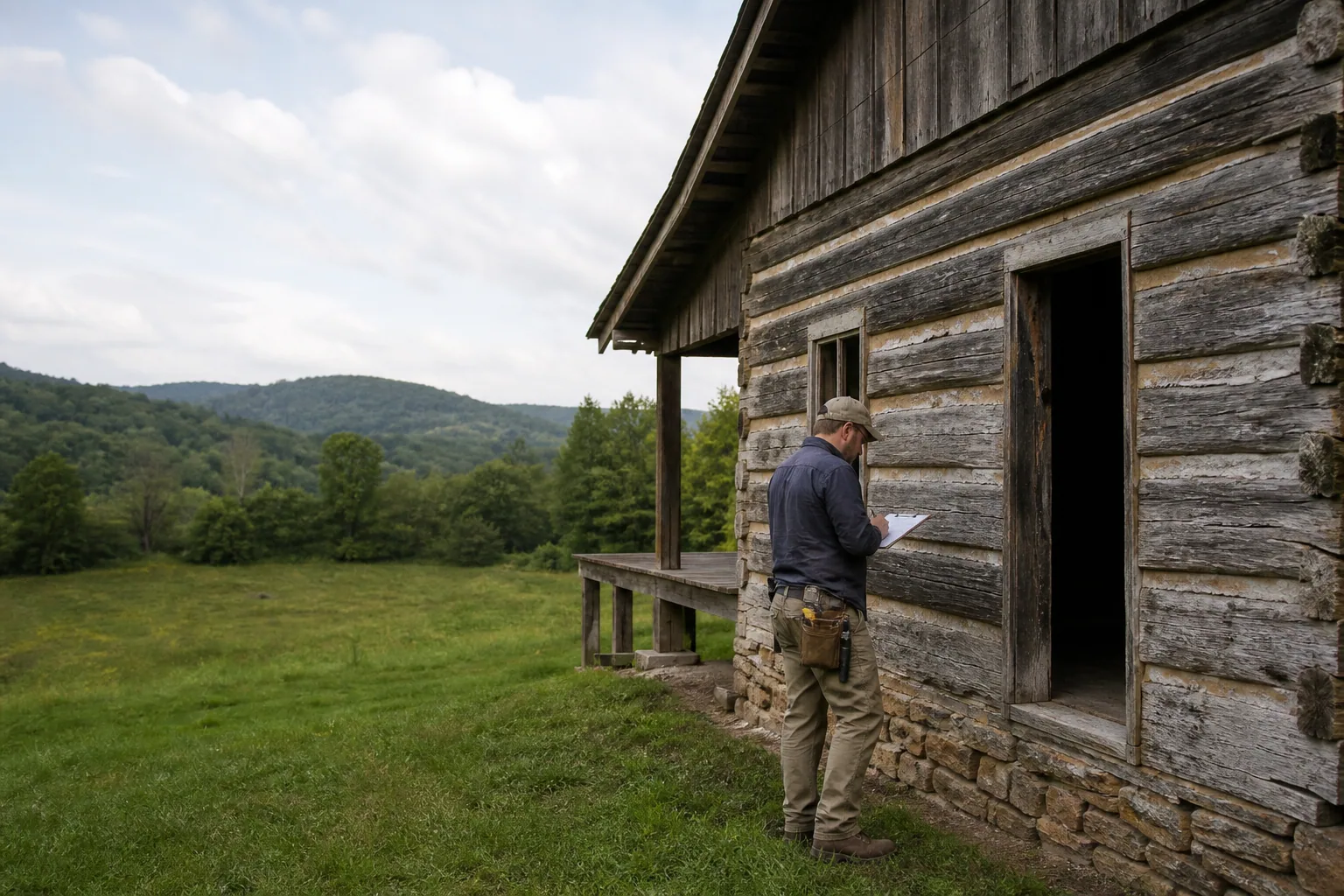
Probing for soft wood, checking log ends, sill logs and any area below a roofline that dumps water. Rot found now is cheaper than rot found after the staining is done.
Media blasting
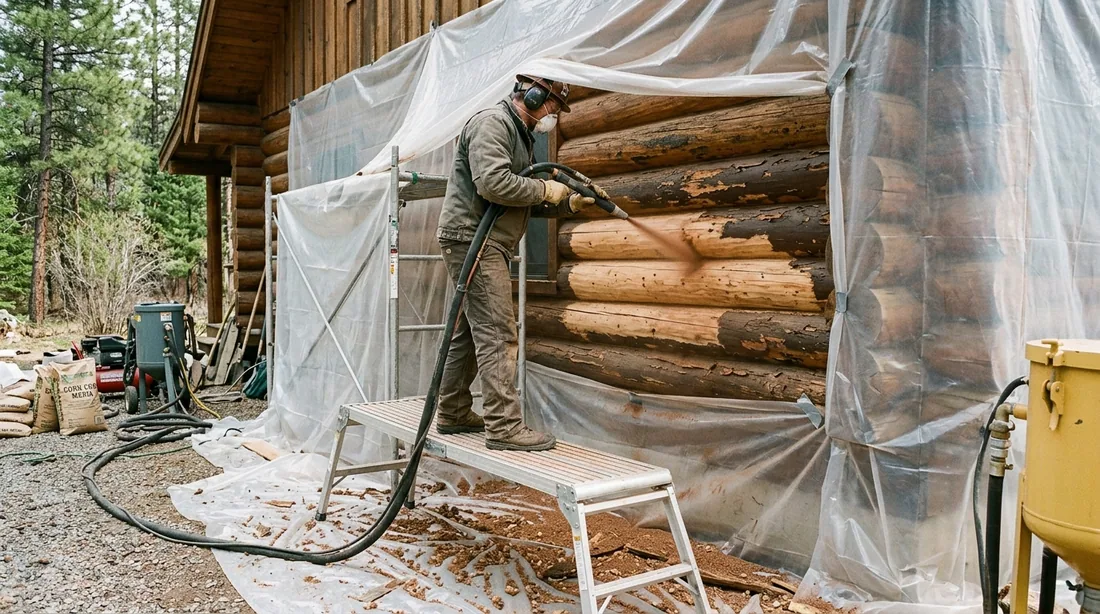
Old failed finish is removed with corn cob, crushed glass or similar media, which cleans the wood without the gouging a mechanical sander leaves. Containment and cleanup are part of this.
Log repair and replacement
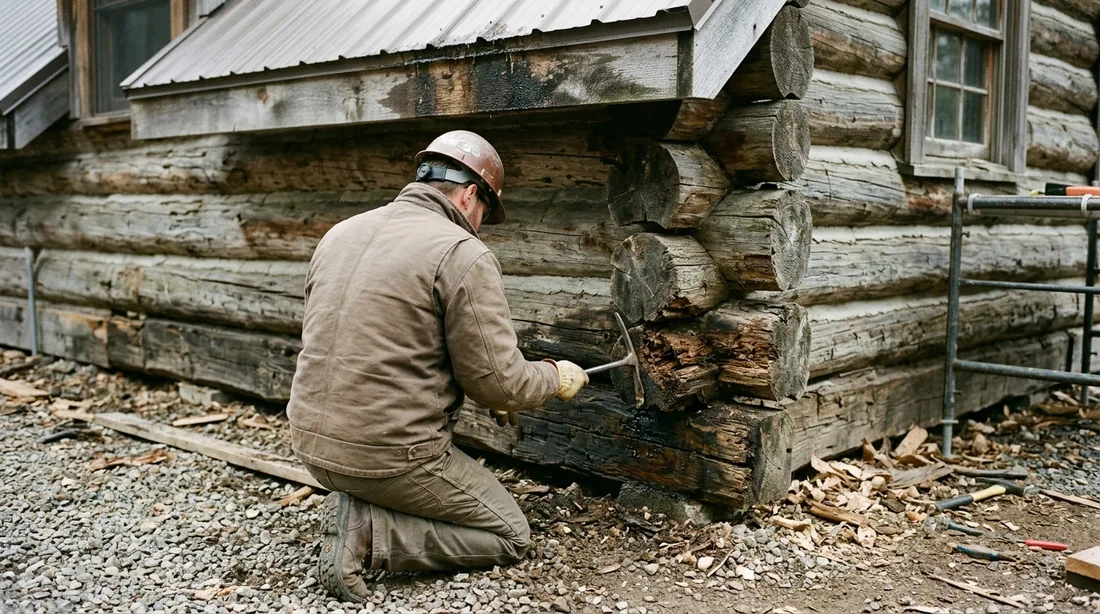
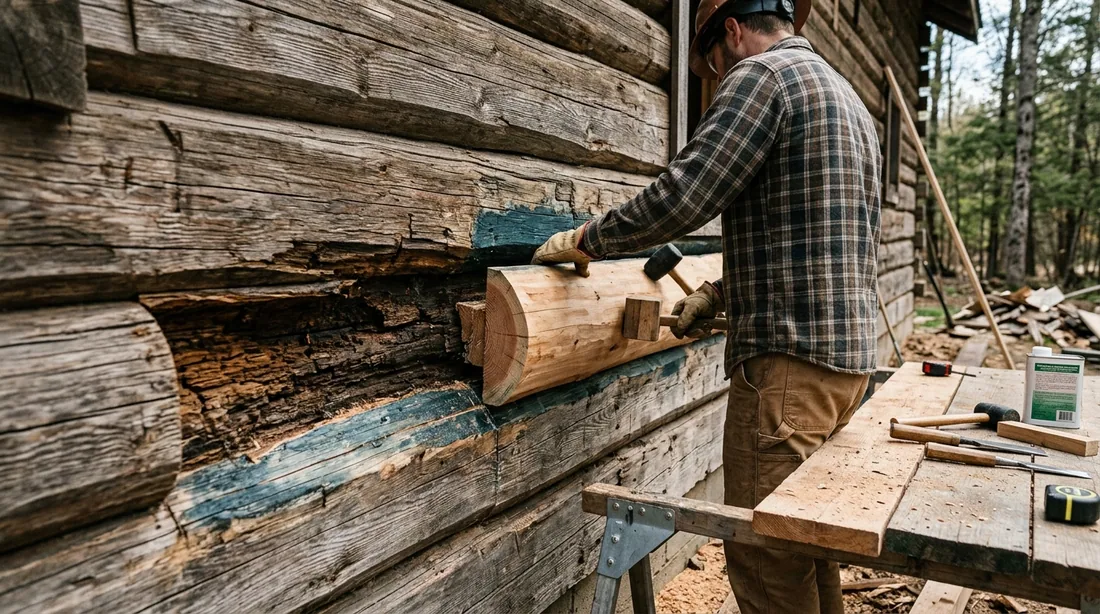
Rotted sections are cut out and repaired with borate treatment, half-log replacement, or Dutchman patches. Full log replacement is priced per log and is the expensive discovery.
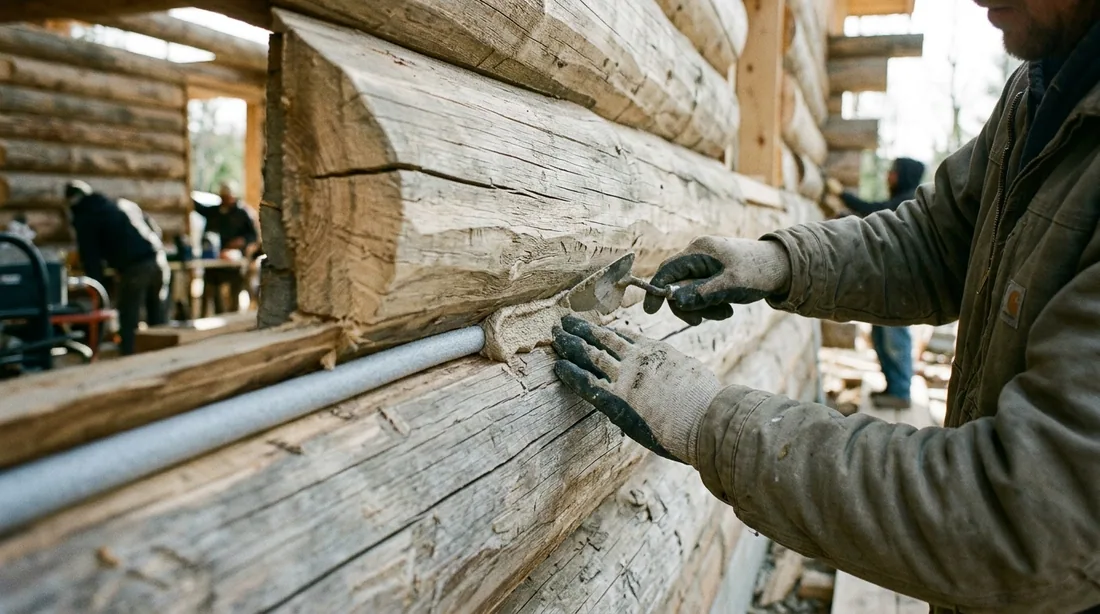
Chinking and sealants
Failed chinking removed and replaced, with backer rod sized so the sealant can flex correctly. Chinking is measured in linear feet of joint and does not scale with floor area.
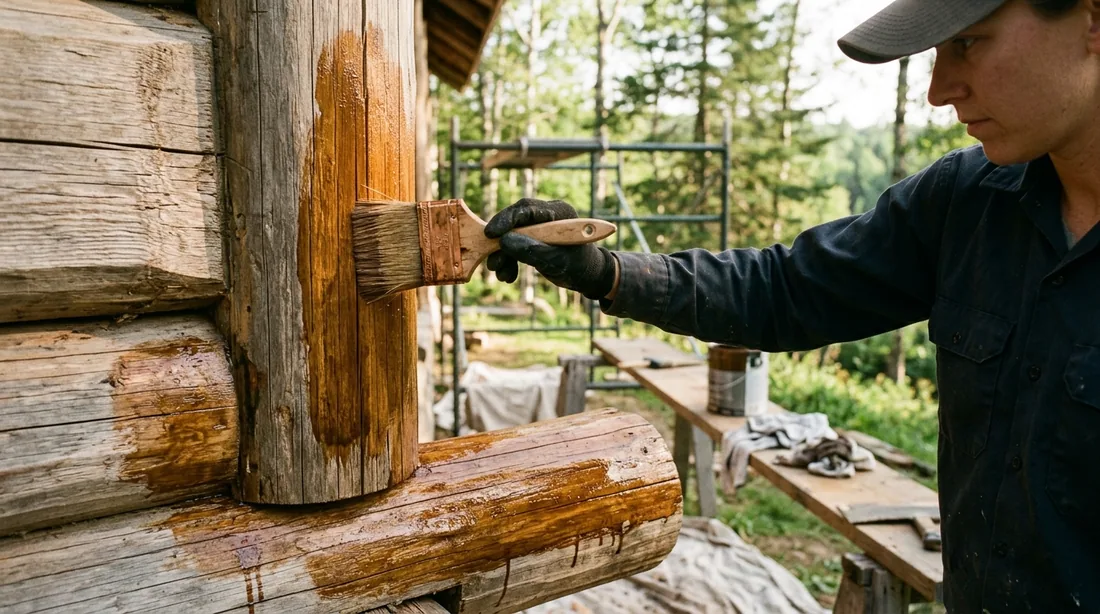
Stain system
Penetrating or film-forming stain applied in the specified number of coats, usually with a clear topcoat. The system matters more than the brand and determines the maintenance interval.
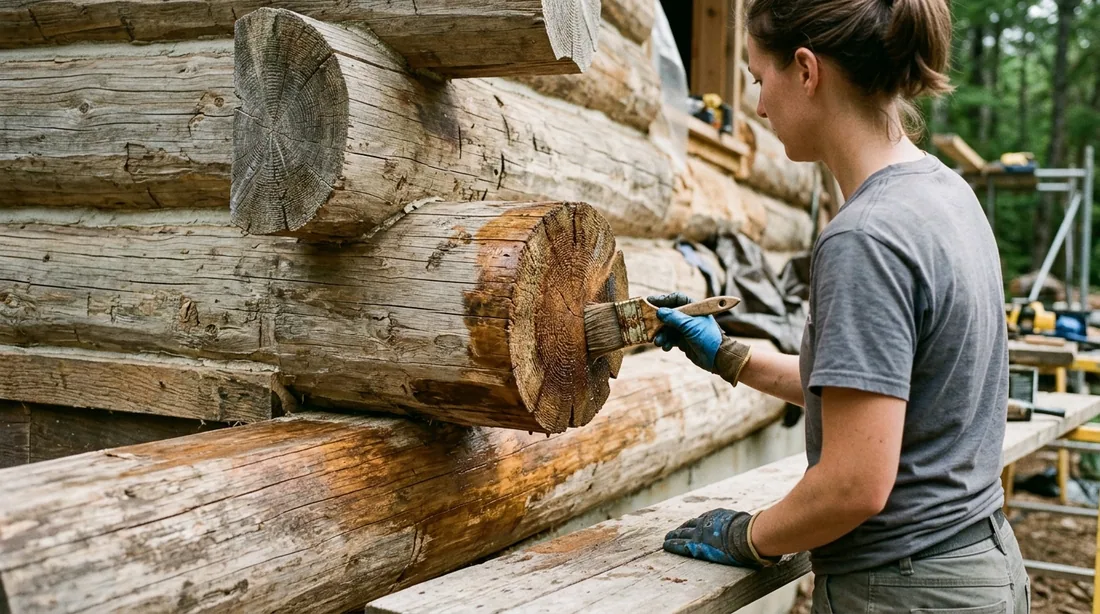
Detail protection
Log ends, sill logs and horizontal surfaces get extra attention because they are where water sits and where the next failure will start.
Budgeting
What it costs
Full restoration — blasting, repair, chinking, stain and seal — is published from about $18 to $20 per square foot upward, with specialists quoting $23 to $40 depending on condition, wall height and access. Media blasting alone runs about $1.50 to $4.00. Critical: confirm whether a quote is priced per square foot of log wall surface or of home floor area, because publishers and contractors use both and the totals differ enormously.
| Scope | Typical range | Most common |
|---|---|---|
| Media blasting only | $2 – $4 | $3 |
| Blast, stain and seal | $12 – $22 | $16 |
| Full restoration with chinking | $18 – $32 | $25 |
| Full restoration, difficult access or heavy rot | $25 – $40 | $32 |
Ranges compiled from Log Home Finishing LLC, Pencil Log Pros. Reviewed 2026-07-18.
Knoxville specifics
What is different about this work in Knoxville
Local climate and building stock change how this job is specified. These figures come from the Census Bureau and NOAA climate normals for Knoxville.
- At roughly 47.9 inches of precipitation a year, gutters, downspouts and adequate roof overhang do more to protect the finish here than the choice of stain does, because splash-back onto the lower courses is the most common origin of rot at this rainfall.
- With about 47.9 inches of annual precipitation and the humidity that comes with it, logs move seasonally, which is why chinking needs correct backer rod so it can flex rather than tear away from the log face after the first full wet-dry cycle.
- With mean July highs near 88.2°F, UV and heat load on the south and west elevations are the pacing factor for maintenance here, and those walls will usually need attention noticeably sooner than the north side of the same house.
Scoping
Do you actually need this done?
The most expensive mistake is paying for the wrong scope. Here is how the usual symptoms sort out.
Process
How the job runs
Survey and moisture readings
Walls probed for soft wood, moisture read, and problem elevations identified. The survey should produce a written list of repairs before a price is fixed.
Containment and blasting
Ground, windows and planting protected, then media blasting to remove failed finish back to sound wood, working systematically across elevations.
Repairs
Rot cut out and treated, patches and half-logs fitted, and any full log replacements carried out. This is where discovered work turns up and where change orders originate.
Chinking and sealing
Old chinking removed, backer rod sized correctly, new chinking applied so it can flex with seasonal log movement instead of tearing away from the wood.
Stain and topcoat
Stain applied in specified coats with correct drying between, then a clear topcoat where the system calls for it. Weather windows govern this step more than anything else.
Common questions
Questions people ask
How much does log home restoration cost?
Published figures for full restoration start around $18 to $20 per square foot and specialists quote $23 to $40 depending on condition, wall height and access. Media blasting alone is roughly $1.50 to $4.00. The single most important thing when comparing quotes is confirming whether the square footage refers to log wall surface or to the home's floor area, because both bases are used and they produce very different totals.
How often does a log home need restaining?
It depends heavily on the system used and on exposure. Elevations facing south and west weather fastest and may need attention years before north-facing walls. Rather than a fixed interval, the practical approach is an annual inspection of the worst-exposed elevation and maintenance coats applied when the finish starts to dull, well before it fails through to bare wood.
Is media blasting better than sanding or pressure washing?
For most restorations, yes. Blasting with corn cob or crushed glass removes failed finish while following the log's contour, without the flat spots and gouging a mechanical sander leaves. Pressure washing is the one to be wary of: it drives water into the wood, raises the grain, and does not reliably remove film finishes, so it frequently produces a worse surface for staining.
How do I know if my logs are rotten?
Probe with a screwdriver or awl, particularly at the bottom courses, exposed log ends, under windows and anywhere below a roof valley that concentrates runoff. Sound wood resists; rotten wood accepts the point with little pressure and often looks darker or feels spongy. Soft spots found before restoration are a repair line item; found afterwards they are a redo.
What is chinking and does mine need replacing?
Chinking is the flexible sealant filling the joints between logs. It has to move as logs expand, contract and settle, which is why it needs proper backer rod behind it rather than being packed solid. If it has pulled away from the log face, cracked through, or is missing in sections, it is letting water into the joint and needs replacing. It is measured in linear feet of joint, independent of floor area.
Next step
Get a real number for your project
Ranges only go so far. Someone has to look at the actual job.
What this site is
Knoxville Log Home Restoration is a referral site, not a contractor. We do not hold a license, own a truck, or send a crew. We research log home restoration pricing and practice, publish what we find, and hand your request to a vetted local company in Knoxville.
That company quotes, schedules, and stands behind its own work, and it contracts with you directly. We do not mark up the price, and you pay us nothing.